Blog

Explore expert tips, insights, and industry updates on professional cleaning. From offices to childcare
centres, discover how our services create healthier, safer, and spotless spaces across Australia.

Blog

Explore expert tips, insights, and industry updates on professional cleaning. From offices to childcare centres, discover how our services create healthier, safer, and spotless spaces across Australia.

Professional Cleaning Equipment and Deep Cleaning

Professional cleaning equipment plays a major role in how effectively commercial spaces are maintained. Offices, warehouses and shared facilities experience far higher foot traffic than homes, which means dirt, dust and wear build up faster. Using the right equipment and scheduling periodic deep cleaning helps businesses maintain hygiene, protect surfaces and extend the life of their premises.

This guide explains why professional equipment matters, what tools are commonly used in commercial environments, and when deep cleaning should be planned.


Why professional cleaning equipment matters for commercial sites

Commercial environments demand more from cleaning tools than domestic spaces. Standard household equipment is not designed to handle large floor areas, heavy soiling or frequent use.

Professional cleaning equipment is essential because it:

  • Removes dirt more effectively from carpets and hard floors

  • Reduces cleaning time across large areas

  • Improves safety by managing spills and residues properly

  • Delivers consistent results across multiple sites

  • Reduces long-term maintenance and replacement costs

For businesses, the right equipment directly affects cleanliness, safety and appearance.


Essential equipment for office and commercial cleaning

Different commercial environments require different tools, but most professional cleaners rely on a core set of equipment.

Vacuums and floor machines

Floors are one of the most heavily used surfaces in any building. Professional floor equipment is designed to clean efficiently without damaging surfaces.

Common equipment includes:

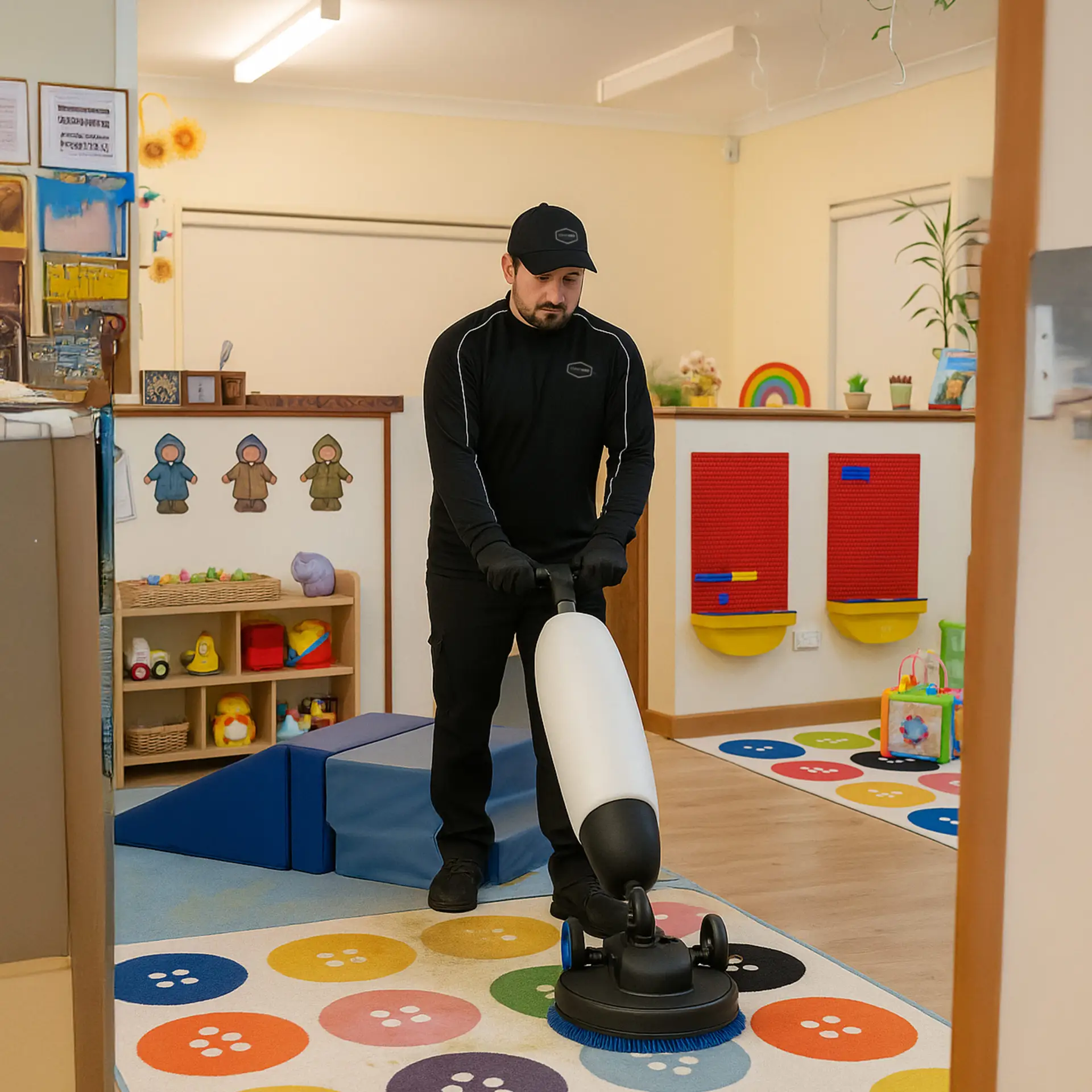
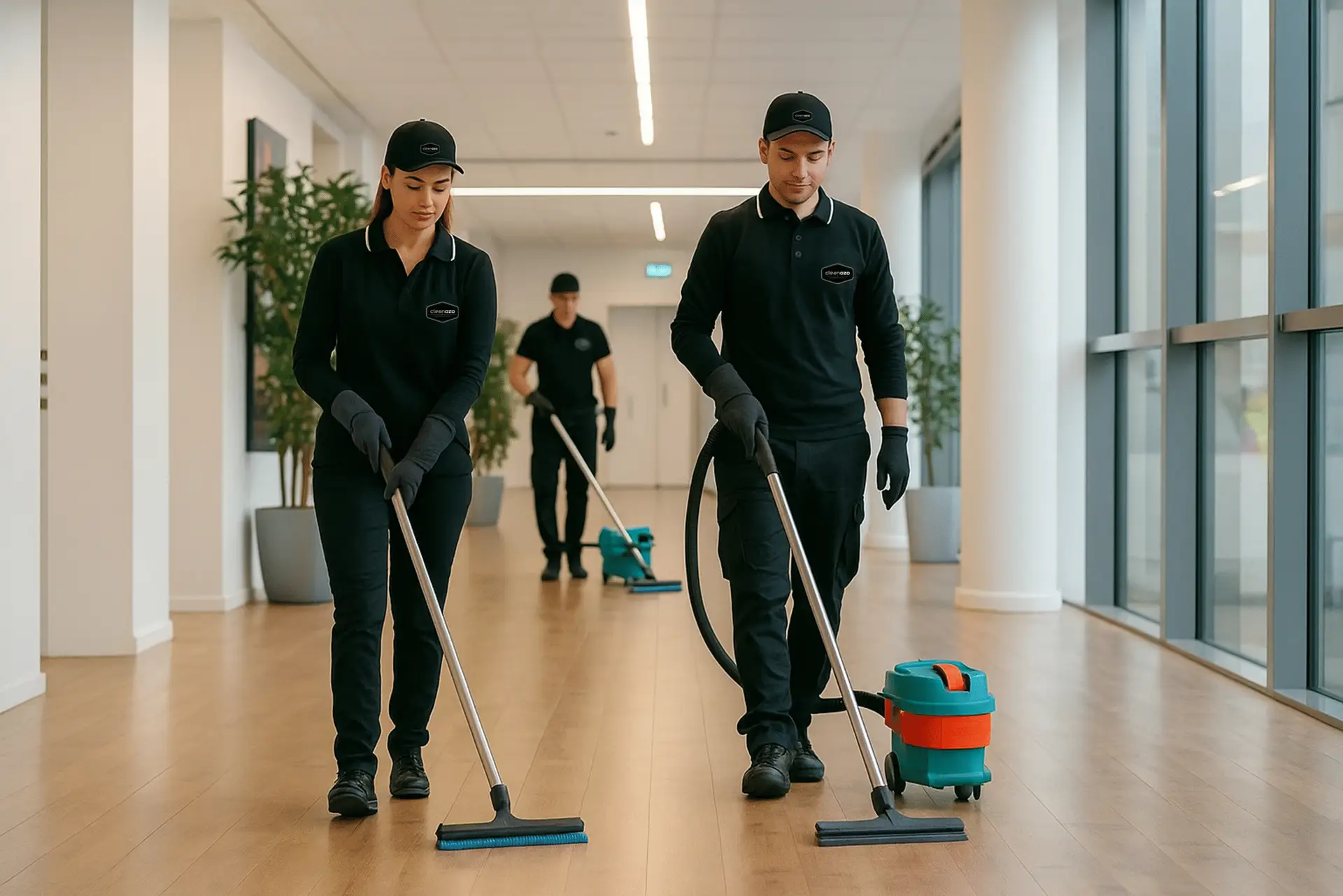
  • Commercial-grade upright and canister vacuums

  • Backpack vacuums for large or complex layouts

  • Auto-scrubbers for hard floors

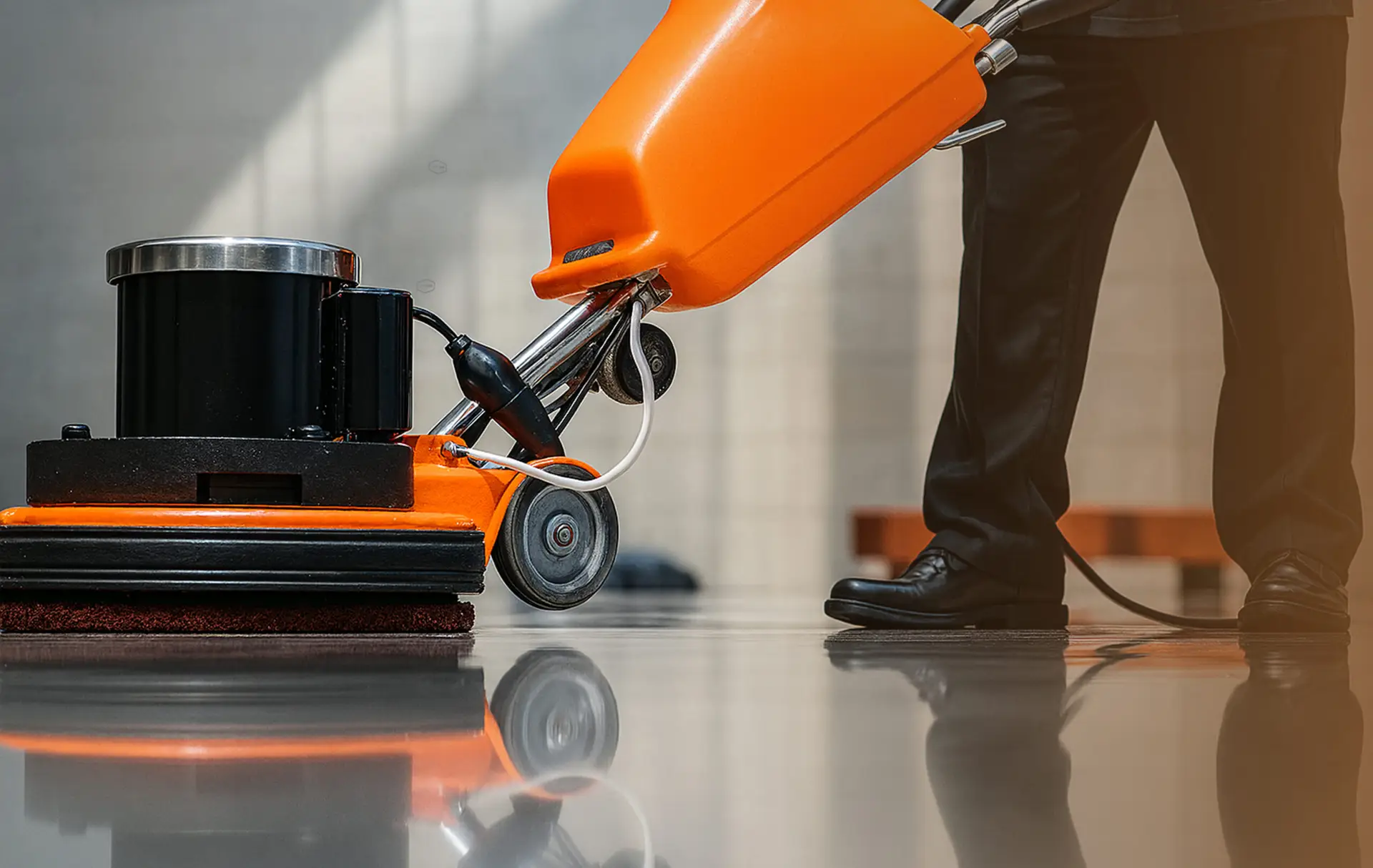
  • Burnishers for polishing and maintaining floor finishes

  • Wet-and-dry machines for spills and car parks

These machines provide stronger suction, better filtration and longer operating life than domestic alternatives.

Microfibre systems and janitorial carts

Modern cleaning relies heavily on systems that improve hygiene while reducing chemical use.

Professional setups typically include:

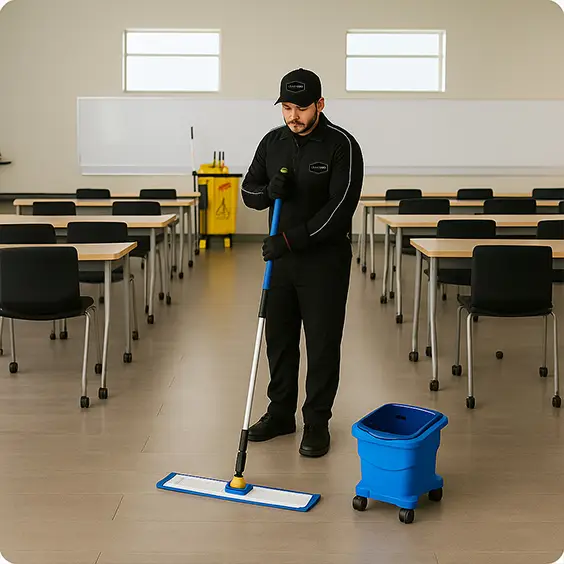
  • Microfibre cloths and flat mops

  • Colour-coded cleaning systems to prevent cross-contamination

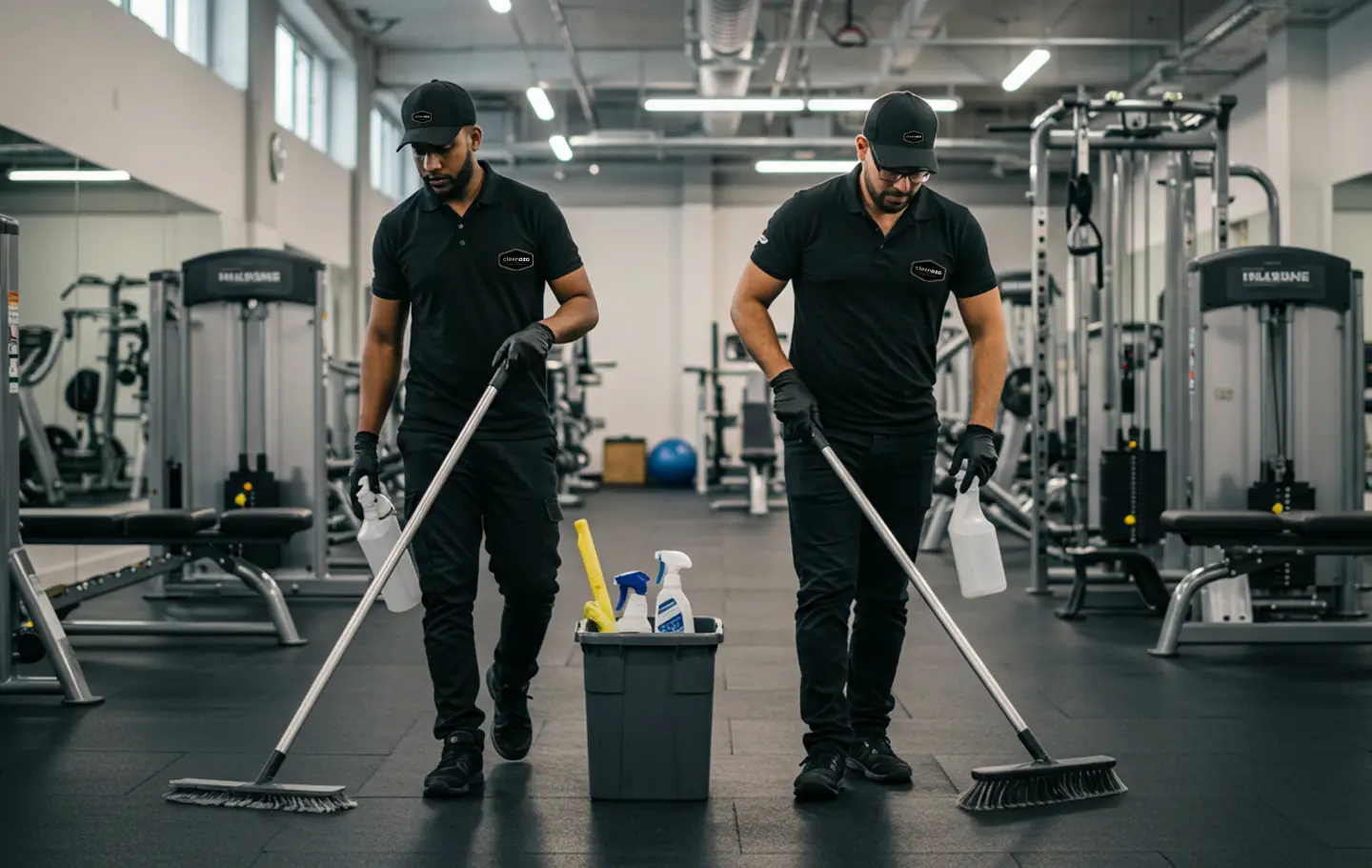
  • Janitorial carts for organised transport of tools and supplies

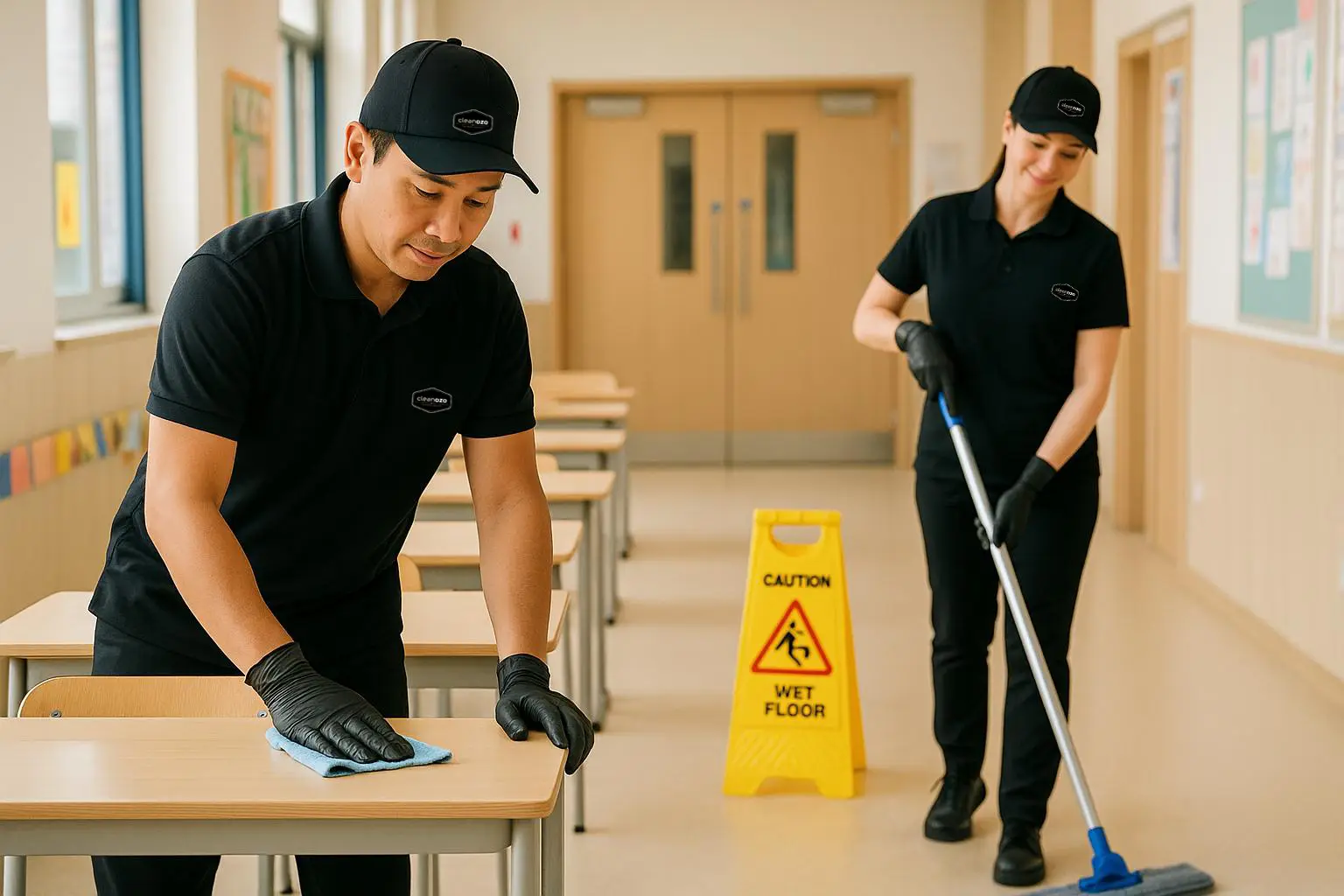
  • Safety signage to manage slip risks during cleaning

These systems improve efficiency and consistency across commercial sites.


Best commercial cleaning products for different surfaces

Using the wrong product on a surface can cause damage or leave residues behind. Professional cleaners select products carefully based on material type and usage.

Common product categories include:

  • Neutral floor cleaners for sealed hard floors

  • Carpet cleaning solutions for extraction or encapsulation

  • Bathroom and disinfectant products for hygiene areas

  • Glass and multi-surface cleaners

  • Degreasers for kitchens and industrial zones

In Australia, cleaning products must be suitable for commercial use and comply with safety requirements. Increasingly, businesses also request environmentally considerate options.


How we use professional cleaning products safely

Safety is a critical part of using professional cleaning equipment and products. Improper use can lead to health risks, surface damage or compliance issues.

Professional cleaning teams manage safety by:

  • Following manufacturer dilution and usage instructions

  • Storing chemicals securely

  • Using appropriate personal protective equipment

  • Training staff in chemical handling and spill response

  • Using colour-coded systems to avoid cross-contamination

Safe cleaning practices protect both cleaning staff and building occupants.

Guidance from Safe Work Australia helps ensure cleaning activities meet workplace safety expectations.

Outbound reference:
https://www.safeworkaustralia.gov.au


Deep clean checklist for offices and facilities

Even with regular cleaning, commercial spaces benefit from scheduled deep cleaning. Deep cleaning targets areas that are not addressed during routine maintenance.

A typical deep clean may include:

  • Carpet steam cleaning or encapsulation

  • Machine scrubbing and sealing of hard floors

  • Detailed kitchen cleaning behind and under appliances

  • Washroom descaling and grout cleaning

  • High dusting of vents, ledges and overhead surfaces

  • Detailed cleaning of doors, frames and skirting boards

Most offices benefit from a deep clean annually, while high-traffic or specialist sites may require it more often.


When to call professional house cleaners versus commercial cleaners

Some businesses assume domestic cleaners can manage commercial spaces. In reality, the difference between domestic and commercial cleaning is significant.

Professional house cleaners are suitable for:

  • Private residences

  • Small home offices

  • Low-traffic spaces

Commercial cleaners are required for:

  • Offices and shared workspaces

  • Commercial buildings and facilities

  • Warehouses and industrial environments

  • Sites with compliance or safety requirements

Using commercial cleaners ensures appropriate equipment, training and safety standards are applied.
CATEGORIES

TAGS

Professional Cleaning Equipment and Deep Cleaning

Professional cleaning equipment plays a major role in how effectively commercial spaces are maintained. Offices, warehouses and shared facilities experience far higher foot traffic than homes, which means dirt, dust and wear build up faster. Using the right equipment and scheduling periodic deep cleaning helps businesses maintain hygiene, protect surfaces and extend the life of their premises.

This guide explains why professional equipment matters, what tools are commonly used in commercial environments, and when deep cleaning should be planned.


Why professional cleaning equipment matters for commercial sites

Commercial environments demand more from cleaning tools than domestic spaces. Standard household equipment is not designed to handle large floor areas, heavy soiling or frequent use.

Professional cleaning equipment is essential because it:

  • Removes dirt more effectively from carpets and hard floors

  • Reduces cleaning time across large areas

  • Improves safety by managing spills and residues properly

  • Delivers consistent results across multiple sites

  • Reduces long-term maintenance and replacement costs

For businesses, the right equipment directly affects cleanliness, safety and appearance.


Essential equipment for office and commercial cleaning

Different commercial environments require different tools, but most professional cleaners rely on a core set of equipment.

Vacuums and floor machines

Floors are one of the most heavily used surfaces in any building. Professional floor equipment is designed to clean efficiently without damaging surfaces.

Common equipment includes:

  • Commercial-grade upright and canister vacuums

  • Backpack vacuums for large or complex layouts

  • Auto-scrubbers for hard floors

  • Burnishers for polishing and maintaining floor finishes

  • Wet-and-dry machines for spills and car parks

These machines provide stronger suction, better filtration and longer operating life than domestic alternatives.

Microfibre systems and janitorial carts

Modern cleaning relies heavily on systems that improve hygiene while reducing chemical use.

Professional setups typically include:

  • Microfibre cloths and flat mops

  • Colour-coded cleaning systems to prevent cross-contamination

  • Janitorial carts for organised transport of tools and supplies

  • Safety signage to manage slip risks during cleaning

These systems improve efficiency and consistency across commercial sites.


Best commercial cleaning products for different surfaces

Using the wrong product on a surface can cause damage or leave residues behind. Professional cleaners select products carefully based on material type and usage.

Common product categories include:

  • Neutral floor cleaners for sealed hard floors

  • Carpet cleaning solutions for extraction or encapsulation

  • Bathroom and disinfectant products for hygiene areas

  • Glass and multi-surface cleaners

  • Degreasers for kitchens and industrial zones

In Australia, cleaning products must be suitable for commercial use and comply with safety requirements. Increasingly, businesses also request environmentally considerate options.


How we use professional cleaning products safely

Safety is a critical part of using professional cleaning equipment and products. Improper use can lead to health risks, surface damage or compliance issues.

Professional cleaning teams manage safety by:

  • Following manufacturer dilution and usage instructions

  • Storing chemicals securely

  • Using appropriate personal protective equipment

  • Training staff in chemical handling and spill response

  • Using colour-coded systems to avoid cross-contamination

Safe cleaning practices protect both cleaning staff and building occupants.

Guidance from Safe Work Australia helps ensure cleaning activities meet workplace safety expectations.

Outbound reference:
https://www.safeworkaustralia.gov.au


Deep clean checklist for offices and facilities

Even with regular cleaning, commercial spaces benefit from scheduled deep cleaning. Deep cleaning targets areas that are not addressed during routine maintenance.

A typical deep clean may include:

  • Carpet steam cleaning or encapsulation

  • Machine scrubbing and sealing of hard floors

  • Detailed kitchen cleaning behind and under appliances

  • Washroom descaling and grout cleaning

  • High dusting of vents, ledges and overhead surfaces

  • Detailed cleaning of doors, frames and skirting boards

Most offices benefit from a deep clean annually, while high-traffic or specialist sites may require it more often.


When to call professional house cleaners versus commercial cleaners

Some businesses assume domestic cleaners can manage commercial spaces. In reality, the difference between domestic and commercial cleaning is significant.

Professional house cleaners are suitable for:

  • Private residences

  • Small home offices

  • Low-traffic spaces

Commercial cleaners are required for:

  • Offices and shared workspaces

  • Commercial buildings and facilities

  • Warehouses and industrial environments

  • Sites with compliance or safety requirements

Using commercial cleaners ensures appropriate equipment, training and safety standards are applied.
CATEGORIES

TAGS